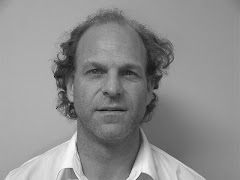
Monday night was Awards Night for Work Inc. Work, Inc. is a sevice provider for people with disabilities and psychiatric disabilities in Massachusetts. My uncle, David Rogers, presented the Joe Rogers Award for Independence to Paul Baxter. It was an exciting night at the IBEW hall, across the street from the site of Work Inc's new facility in Dorchester. The evening was also groundbreaking and by next year the new location should be good to go.
We showed a video for the event that features the seven nominees for the award. The nominees are Paul Baxter, John Carideo, Robert Collier, Alan Miller, Robert Ouelette, Grace Smith and Maura Sullivan. The award honors independence and each showed a side of the quality that was so essential in Joe Rogers' life.
Here's the video:
And the video from last year:
Monday, June 23, 2008

Thursday, May 29, 2008
Ohio
Back from four days in classrooms learning – i.e. filming – about kids learning. It's one of the new things in education – formative assessment – and I was skeptical if it was just the latest thing or something. Turns out it really is something and really turned my head when I saw it work.
The best case was a fourth grade (I think it was fourth grade, but it all went into one, after a number of classes) math class in wich the kids were just cooking along in some formative exercises. The formative part is the kids and teacher assessing what they know. It's meant to be a quick snapshot which then moves into pushing the boundary of what the kid's know.
Very cool stuff and shows me how far the classroom can go in a short time.
The great fringe benefit of the job is that I got to stay with my sister, Nancy who had just moved to Columbus with her husband, Rich. They were in the center of all the school's we visited, and only two blocks from a real town center. Not a strip mall, but a real place. Glad to see we've still got some of those real places around the country.
The best case was a fourth grade (I think it was fourth grade, but it all went into one, after a number of classes) math class in wich the kids were just cooking along in some formative exercises. The formative part is the kids and teacher assessing what they know. It's meant to be a quick snapshot which then moves into pushing the boundary of what the kid's know.
Very cool stuff and shows me how far the classroom can go in a short time.
The great fringe benefit of the job is that I got to stay with my sister, Nancy who had just moved to Columbus with her husband, Rich. They were in the center of all the school's we visited, and only two blocks from a real town center. Not a strip mall, but a real place. Glad to see we've still got some of those real places around the country.
Sunday, May 18, 2008
5 Point Film Festival
Just read Bob Lefsetz post "Doing Business." Bob's been on the changes in the music industry since napster and has provided insight into the changes, we in the film world are now seeing full-on today. Music led the way as digital audio is smaller than video clips. But download for video and streaming is here, and the changes to the industry and culture are revolutionary.
One aspect of the change is related to this blog and how we present our work to one another. As with so many changes it spins to both more and less mediation. On the one hand we – filmmakers – have more opportunity to present ourselves and our work to our audience. But, we also are even more dependent on others to present our work. The new paradigm is about partnerships, about finding alliances and interests and using them to get our work more known.
I was out at a new film festival in Carbondale, Colorado, the 5 Point Film Festival, showing a new version of Flying Downhill, our profile of Bode Miller. It was the next chapter – I'm calling it the second life – in this ongoing saga of one of the most extraordinary performers working these days. The cut I showed is based on "The Skier's Version" which we first constructed in 2004 to be more like a Warren Miller film – episodic as opposed to narrative, jammed with music, each piece of which becomes a theme in itself. Episodes are about: explorer, faller, family back home, the roots... What was fun about making this cut is that the episodes could stand alone. In a narrative there is an underlying structure that makes constructing the film a complicated puzzle, where specific pieces must go in specific places to support the whole. No hassles like that in episodic media. Film too long? Throw out an episode or two. Too short, throw in Bode free-skiing in Bella Coola, or being a superstar in Europe.
This kind of modular constuction suits posting short clips very well. It's not about previews from our film, it's about moments in time, episodes in the world our film inhabit.
In my films I become part of a world. I invest in the people and place that has hooked my interest. I form a relationship with character and the specifics of what makes this character tick. It is particular.
One aspect of the change is related to this blog and how we present our work to one another. As with so many changes it spins to both more and less mediation. On the one hand we – filmmakers – have more opportunity to present ourselves and our work to our audience. But, we also are even more dependent on others to present our work. The new paradigm is about partnerships, about finding alliances and interests and using them to get our work more known.
I was out at a new film festival in Carbondale, Colorado, the 5 Point Film Festival, showing a new version of Flying Downhill, our profile of Bode Miller. It was the next chapter – I'm calling it the second life – in this ongoing saga of one of the most extraordinary performers working these days. The cut I showed is based on "The Skier's Version" which we first constructed in 2004 to be more like a Warren Miller film – episodic as opposed to narrative, jammed with music, each piece of which becomes a theme in itself. Episodes are about: explorer, faller, family back home, the roots... What was fun about making this cut is that the episodes could stand alone. In a narrative there is an underlying structure that makes constructing the film a complicated puzzle, where specific pieces must go in specific places to support the whole. No hassles like that in episodic media. Film too long? Throw out an episode or two. Too short, throw in Bode free-skiing in Bella Coola, or being a superstar in Europe.
This kind of modular constuction suits posting short clips very well. It's not about previews from our film, it's about moments in time, episodes in the world our film inhabit.
In my films I become part of a world. I invest in the people and place that has hooked my interest. I form a relationship with character and the specifics of what makes this character tick. It is particular.
Friday, April 4, 2008
Universal Design for Learning
I shot a long day yesterday. It was a conference with a name almost as long as the shooting day: Universal Design for Learning: Tipping Points from Research to Practice. It was fascinating material, very much inside a specialized niche, but related to so many other cultural movements. And just the fact of shooting a long day – though tiring and hard work – is rewarding. And that's more to the "Universal" aspects of this: how the niche defines the norm.
Much of my work is back here in my office. Long term projects, long presented and crafted. And it feels good to get out into the field – really another foreign field – and get rewarded (aka PAID) for doing that. And that's how work can be rewarding and fulfilling.
The content of much of the conference was about how the classroom will be, increasingly, a place where universal design elements will serve all children, including those with "disabilities." Some of the most exciting moments – speaking, of course, subjectively – were when web based technology enable all students to access content. Linked together it can become social networking. As we – with our climate change project, and our continued outreach towards individuals with disabilities and their supporters – move towards a way to link interests, we are part of the niche becoming universal. The niche becomes more universal (or it can become so) as it becomes more accurate in its reflection of the human needs and aspiration of the niche.
Much of my work is back here in my office. Long term projects, long presented and crafted. And it feels good to get out into the field – really another foreign field – and get rewarded (aka PAID) for doing that. And that's how work can be rewarding and fulfilling.
The content of much of the conference was about how the classroom will be, increasingly, a place where universal design elements will serve all children, including those with "disabilities." Some of the most exciting moments – speaking, of course, subjectively – were when web based technology enable all students to access content. Linked together it can become social networking. As we – with our climate change project, and our continued outreach towards individuals with disabilities and their supporters – move towards a way to link interests, we are part of the niche becoming universal. The niche becomes more universal (or it can become so) as it becomes more accurate in its reflection of the human needs and aspiration of the niche.
Sunday, March 2, 2008
Friday, February 22, 2008
My Uncle Joe
Re: MyUncleJoe.org
More than twenty years ago I began a film project on my uncle. I thought he was cool and interesting. He had lived over half his life in an institution with a label of what then was called "mental retardation." But he got out of the institution – Fernald State School – and found his rightful place in a community south of Boston: Quincy, Massachusetts.
He had challenges, but faced them with a free and indomitable spirit. The film I made about Joe, simply titled, My Uncle Joe, was released in 1991.
We lost Joe in February, 2005 when he was struck and killed by a small truck while he was crossing a street. He was heading home after dinner at one of his favorite restaurants.
I've been working with Joe's brothers to create a site dedicated to Joe's independence. There will be this show site and a related web site, MyUncleJoe.org. All will present stories of people who, like Joe, tell us something about how our world works and who we are. It will be about struggles and triumphs. It will be for people labeled with disabilities and poeple who help them, as well as people who just want to know more about what makes us all tick.
So here we go. It starts today.
Bill Rogers
February 21, 2008
More than twenty years ago I began a film project on my uncle. I thought he was cool and interesting. He had lived over half his life in an institution with a label of what then was called "mental retardation." But he got out of the institution – Fernald State School – and found his rightful place in a community south of Boston: Quincy, Massachusetts.
He had challenges, but faced them with a free and indomitable spirit. The film I made about Joe, simply titled, My Uncle Joe, was released in 1991.
We lost Joe in February, 2005 when he was struck and killed by a small truck while he was crossing a street. He was heading home after dinner at one of his favorite restaurants.
I've been working with Joe's brothers to create a site dedicated to Joe's independence. There will be this show site and a related web site, MyUncleJoe.org. All will present stories of people who, like Joe, tell us something about how our world works and who we are. It will be about struggles and triumphs. It will be for people labeled with disabilities and poeple who help them, as well as people who just want to know more about what makes us all tick.
So here we go. It starts today.
Bill Rogers
February 21, 2008
Wednesday, February 13, 2008
Picture This Film Festival
Was pleased to accept an award from the Picture This Film Festival for FRONT WARDS, BACK WARDS in Calgary this past Saturday. I only wish I could have made it there in person. It seems like a grass roots fest, for people with disabilities, celebrating the individual with a people-first perspective. And an honor to be recognized by them.
The challenge in creating work that is honest about disability is that you have to form a complete, often complex relationship with your subject. We can certainly say that disability is only a definition – a state of mind that can have little to do with the capabilities of a person – but then there's the reality of the personal experience. With my Uncle Joe, who was labeled "mildly mentally retarded" I often sensed frustration at limitations, real and projected. An ongoing issue was not being able to drive a car. These limitations are real. A driver's license and car are freedom in America.
We can and do create false divisions between "us" and "them." Having spent a long time making and learning about people with disabilities and the place where such people were defined, I've found the dividing line between ability and disability to be malleable, personal and cultural.
An example of this idea is contained in the title of our film, and the title I wanted to give it. We ultimately went with the title Front Wards, Back Wards because it refers to the varying shades of disability (or not) that were lumped together at the institution. The title I wanted was Idiots, Simpletons & Fools. It was vetoed by many people who were concerned of the obvious negative connotations for people so labeled. I liked it precisely because it points to negative labeling, and implicates those creating the labels. But it is not for me to judge the effect of negative labeling, so I would have had to overcome the objections to try to command more attention. Many other filmmakers would have done so, and either I'm a wimp or I listened.
And that points to the two realities that intersect with disability – my perspective as maker and your perspective as viewer. Both relate to the important reality of the subject. It's about how we all meet in images and experiences – as all play out in images and sounds. Is the experience true? Is it real? Is it significant? Glad to get a recognition from the Picture This folks that they thought yes.
Here's the letter I sent in acceptance of the award:
I am so pleased to accept your award for Front Wards, Back Wards. Making this film has been long and often hard. Hard waiting for funds, hard waiting for doors of access to open, hard to go inside a place where human beings never should have been. But my personal experience in making it was easy in comparison to those who lived, forgotten, behind Fernald’s walls and places like it.
In my early days researching this project I found a note – in crayon, scrawled – it said “I want to go home.” Who was that person? What were the conditions of his or her life?
When I got tired because of the hard work, discouraged because the work is long, I remembered that note and the stories of Vic and Joe and Patti, and remembered that they were the ones who had it hard. And from that perspective my job was and is really easy: listen, look and tell others.
This project is about the first institution for people defined as mentally and developmentally disabled. It’s about how institutional walls acted to contain people. And to contain we have to define – what’s in and what’s out. Working on this project, working on a project about how containers define those we contain showed me that it’s not only the disability that presents the problem but our, to borrow your festival’s title, our picture of it, our notion of disability and the conditions of the humans whose lives with disability we see and define.
But I also wanted my audience to spend time in a place where we cannot simply explain away disability. It is not the case that we can say that disability is MERELY a state of mind. When someone needs to be fed, moved, even in a sense spoken for, as is the case of one of our films stars, Patti Hillis, there is a disability, a particular experience that requires an adjustment from “normal” experience. Patti confronts us with a way of relating with the world that is markedly different from most others. But in showing her distinct experience, we can see that familiarity. She wants to go out into the air, and feel a spring breeze on her cheeks.
So thank you for your recognition of stories like Patti’s and the complex web that it weaves with others. It feels like a recognition of the spirit of that person who said, so we could hear it, years later, but loud and clear, “I want to go home.” I imagine that person looking out one of Fernald windows, wondering and hoping we can hear. Your festival now has heard that voice as you’ve welcomed many others. Thank you.
-Bill Rogers
Producer/ Director Front Wards, Back Ward
The challenge in creating work that is honest about disability is that you have to form a complete, often complex relationship with your subject. We can certainly say that disability is only a definition – a state of mind that can have little to do with the capabilities of a person – but then there's the reality of the personal experience. With my Uncle Joe, who was labeled "mildly mentally retarded" I often sensed frustration at limitations, real and projected. An ongoing issue was not being able to drive a car. These limitations are real. A driver's license and car are freedom in America.
We can and do create false divisions between "us" and "them." Having spent a long time making and learning about people with disabilities and the place where such people were defined, I've found the dividing line between ability and disability to be malleable, personal and cultural.
An example of this idea is contained in the title of our film, and the title I wanted to give it. We ultimately went with the title Front Wards, Back Wards because it refers to the varying shades of disability (or not) that were lumped together at the institution. The title I wanted was Idiots, Simpletons & Fools. It was vetoed by many people who were concerned of the obvious negative connotations for people so labeled. I liked it precisely because it points to negative labeling, and implicates those creating the labels. But it is not for me to judge the effect of negative labeling, so I would have had to overcome the objections to try to command more attention. Many other filmmakers would have done so, and either I'm a wimp or I listened.
And that points to the two realities that intersect with disability – my perspective as maker and your perspective as viewer. Both relate to the important reality of the subject. It's about how we all meet in images and experiences – as all play out in images and sounds. Is the experience true? Is it real? Is it significant? Glad to get a recognition from the Picture This folks that they thought yes.
Here's the letter I sent in acceptance of the award:
I am so pleased to accept your award for Front Wards, Back Wards. Making this film has been long and often hard. Hard waiting for funds, hard waiting for doors of access to open, hard to go inside a place where human beings never should have been. But my personal experience in making it was easy in comparison to those who lived, forgotten, behind Fernald’s walls and places like it.
In my early days researching this project I found a note – in crayon, scrawled – it said “I want to go home.” Who was that person? What were the conditions of his or her life?
When I got tired because of the hard work, discouraged because the work is long, I remembered that note and the stories of Vic and Joe and Patti, and remembered that they were the ones who had it hard. And from that perspective my job was and is really easy: listen, look and tell others.
This project is about the first institution for people defined as mentally and developmentally disabled. It’s about how institutional walls acted to contain people. And to contain we have to define – what’s in and what’s out. Working on this project, working on a project about how containers define those we contain showed me that it’s not only the disability that presents the problem but our, to borrow your festival’s title, our picture of it, our notion of disability and the conditions of the humans whose lives with disability we see and define.
But I also wanted my audience to spend time in a place where we cannot simply explain away disability. It is not the case that we can say that disability is MERELY a state of mind. When someone needs to be fed, moved, even in a sense spoken for, as is the case of one of our films stars, Patti Hillis, there is a disability, a particular experience that requires an adjustment from “normal” experience. Patti confronts us with a way of relating with the world that is markedly different from most others. But in showing her distinct experience, we can see that familiarity. She wants to go out into the air, and feel a spring breeze on her cheeks.
So thank you for your recognition of stories like Patti’s and the complex web that it weaves with others. It feels like a recognition of the spirit of that person who said, so we could hear it, years later, but loud and clear, “I want to go home.” I imagine that person looking out one of Fernald windows, wondering and hoping we can hear. Your festival now has heard that voice as you’ve welcomed many others. Thank you.
-Bill Rogers
Producer/ Director Front Wards, Back Ward
Subscribe to:
Posts (Atom)


 Posts
Posts